


Warning: Uninitialized string offset 19 in /home/tcgardens/public_html/wp-content/plugins/fusion-builder/shortcodes/fusion-table.php on line 119
Planting A New Lawn
Planting A New Lawn
Plan and Pick Your Grass
- Best timing (SE Idaho): For Kentucky Bluegrass seed to germinate successfully, the soil temperature needs to be consistently between 50°F and 65°F. This corresponds to daytime air temperatures ranging from approximately 60°F to 75°F. Late summer/early fall is ideal. Spring also works well, once we start to warm up.
- Blend ideas: Kentucky Bluegrass is the king of grasses in East Idaho. But there are many different varieties to choose from. Generally, you get what you pay for, with the newest and best varieties costing more than the older common varieties.

Clear the Area
- Remove rocks, sticks, and old turf or weeds.
- If killing an existing lawn or heavy weeds, use a non-selective herbicide such as KillzAll following the label; wait 7–14 days and re-treat any green survivors.
Grade for Drainage
- Rough-grade to 1–2% slope away from buildings.
- Fill low spots; feather soil along walks/curbs so the finished lawn sits slightly above hard edges.
Improve the Soil–A huge payoff
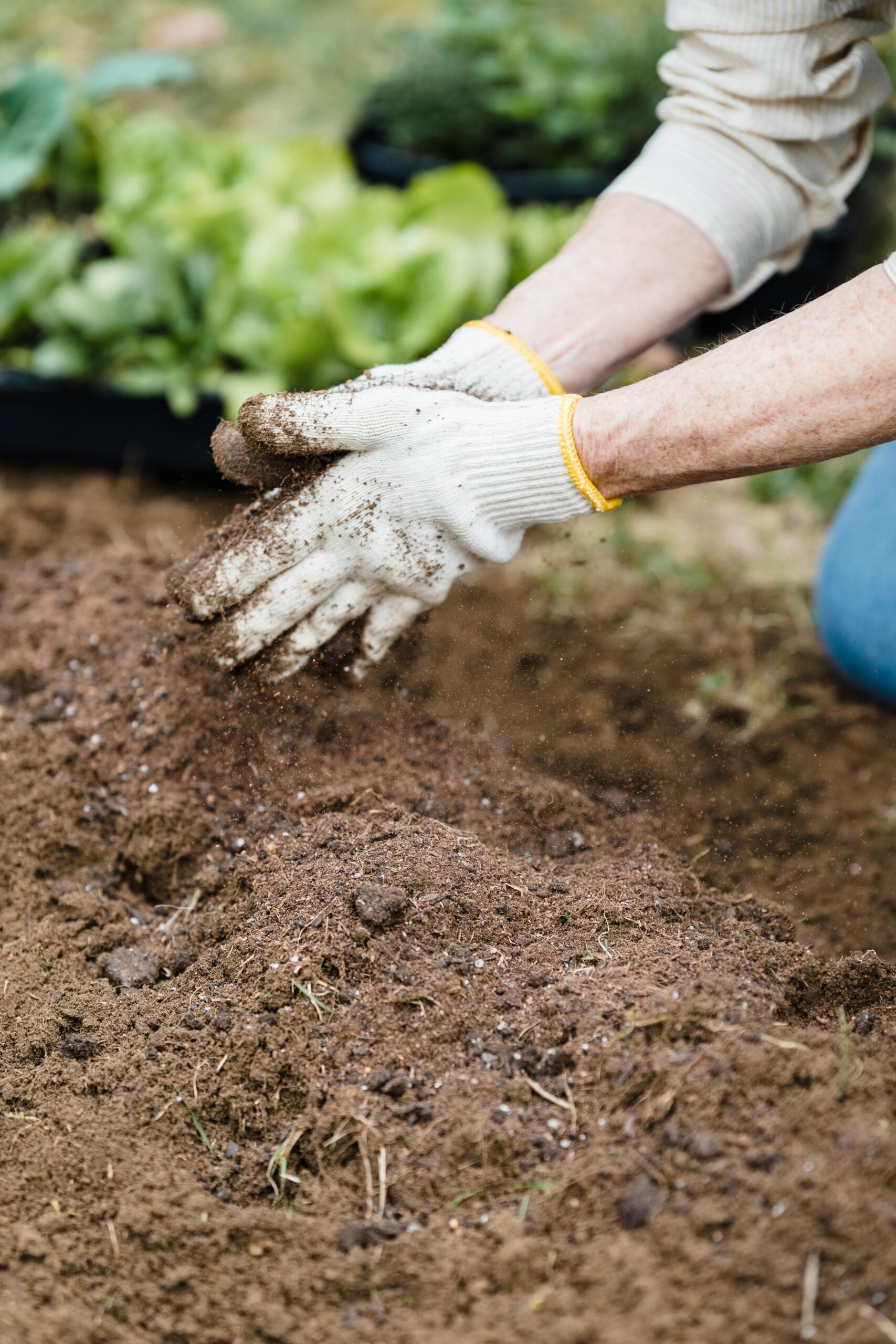
- Spread up to an inch of T&C Soil Enhancer, Soil Pep, or another well composted amendment over the entire area and till 4–6″ deep.
- Do not use barnyard manure that may be contaminated with noxious weeds such as Quack Grass.
- Rake smooth.
Dial in irrigation (before seed!)
- If using automated sprinkler systems, ensure head-to-head coverage with no dry wedges.
- Fix leaks/clogged nozzles now; run a short test to see coverage.
Grade for Drainage
- Rough-grade to 1–2% slope away from buildings.
- Fill low spots; feather soil along walks/curbs so the finished lawn sits slightly above hard edges.
Improve the Soil–A huge payoff
- Spread up to an inch of T&C Soil Enhancer, or another well composted amendment over the entire area and till 4–6″ deep.
- Do not use barnyard manure that may be contaminated with noxious weeds such as Quack Grass.
- Rake smooth.
Dial in irrigation (before seed!)
- If using automated sprinkler systems, ensure head-to-head coverage with no dry wedges.
- Fix leaks/clogged nozzles now; run a short test to see coverage.

Final surface prep
- Rake to a fine, even seedbed.
- Firm but not hard: after raking, your heel should sink 1/4″.
- Lightly roll if fluffy, then rake again to break any crust.
- At this time, apply Town and Country Seed & Sod Starter following label directions. This high phosphate fertilizer encourages rapid root development and will go a long way toward helping your lawn get off to a great start.
Sowing the seed
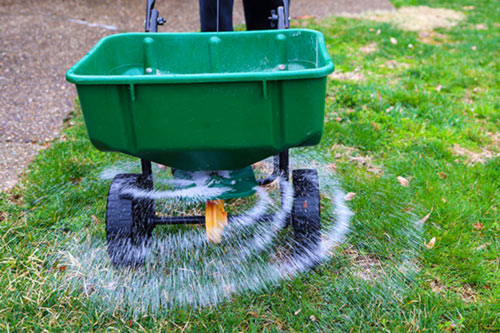
- Apply seed now using a drop or broadcast spreader. If you don’t have one, you can spread seed by hand with a sweeping motion, though it takes some practice and works best for small areas. Bluegrass may take 14–30 days to sprout, while perennial rye can germinate in 7–10 days. Use 3 lbs of seed per 1,000 sq. ft.
- Spreader settings can vary but here are some guidelines for various spreaders:
| Green Thumb Broadcast Spreader – 8 | Green Thumb Drop Spreader -10 |
|---|---|
| Earthway 20250 Broadcast Spreader – 15 | Scotts Steel Drop Spreader – 5 |
| Fertilome Broadcast Spreader – 8 | Fertilome Drop Spreader – 10 |
| Green Thumb Broadcast Spreader – 8 |
|---|
| Earthway 20250 Broadcast Spreader – 15 |
| Fertilome Broadcast Spreader – 8 |
| Green Thumb Drop Spreader – 10 |
| Scotts Steel Drop Spreader – 5 |
| Fertilome Drop Spreader – 10 |
These settings are meant for covering the lawn twice in right angles to spread seed evenly and avoid bare spots. Spreader settings can vary, so adjust if too much or too little seed is coming out.
- Watering after seeding:
First Mow and Early Care
- First mow grass with a sharp blade when it hits 3 – 3 1/2″; cut to 2 1/2 – 3″.
- Fertilize again with a slow-release lawn food such as Town & Country’s Premium Lawn Food at 4–6 weeks.
- You will see weeds! Wait until you’ve mowed 3 times before using a broadleaf herbicide such as Fertilome Weed Out or Weed Free Zone (follow labels exactly).
- If blades look pale because of our alkaline soils, supplement with a chelated iron such as Dr. Iron.
- Keep heavy traffic off for 4 – 6 weeks.